Can a nonwoven interlayer speed up composite manufacturing — and stay in the part?
Composite manufacturing often requires a compromise between efficient resin flow during production and the mechanical properties of the final laminate. My bachelor thesis investigated whether hybrid nonwoven interlayers could increase permeability during resin infusion while remaining permanently integrated in the composite structure.
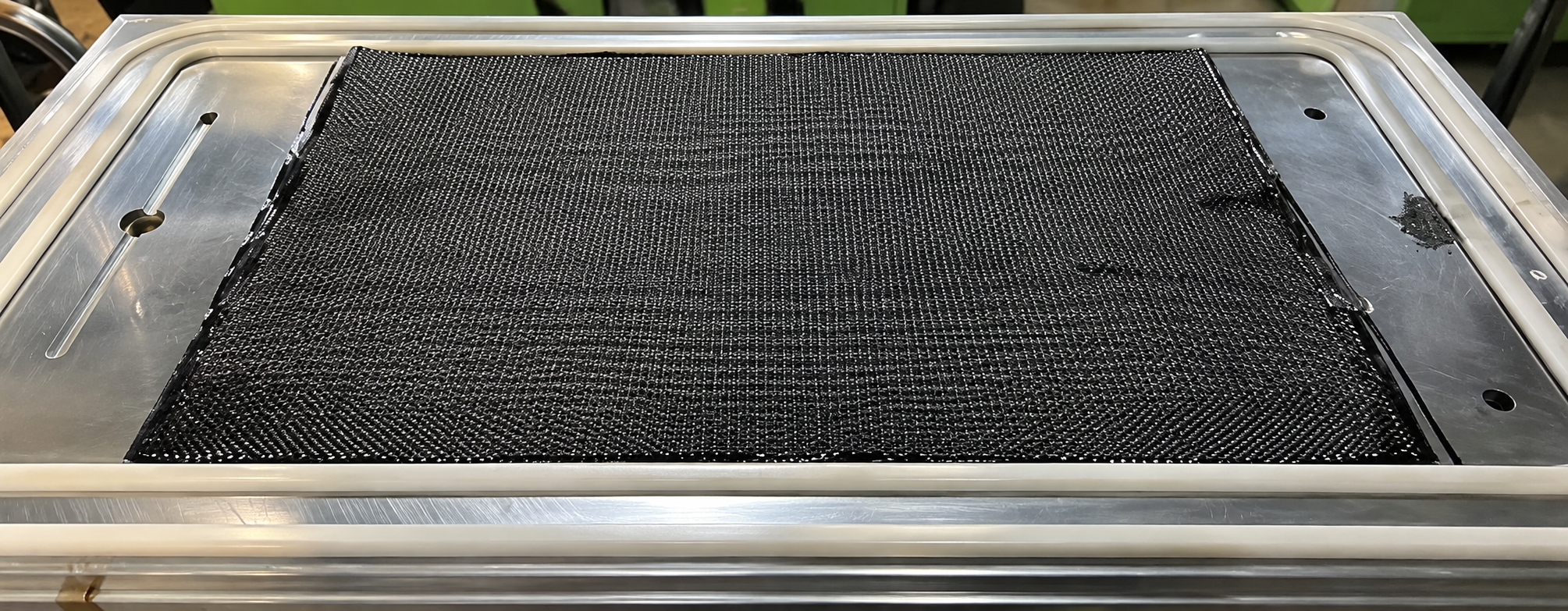
The problem
Liquid composite moulding processes depend on resin flowing through the reinforcement before curing. Low permeability can increase filling times and make the manufacturing process more difficult to control.
Additional flow media can improve resin transport, but they normally have to be removed after production. An alternative is to integrate a highly permeable layer directly into the laminate.
The central question of the thesis was therefore whether a hybrid nonwoven could improve resin flow sufficiently while remaining part of the finished composite component.
Approach
Defined the material system
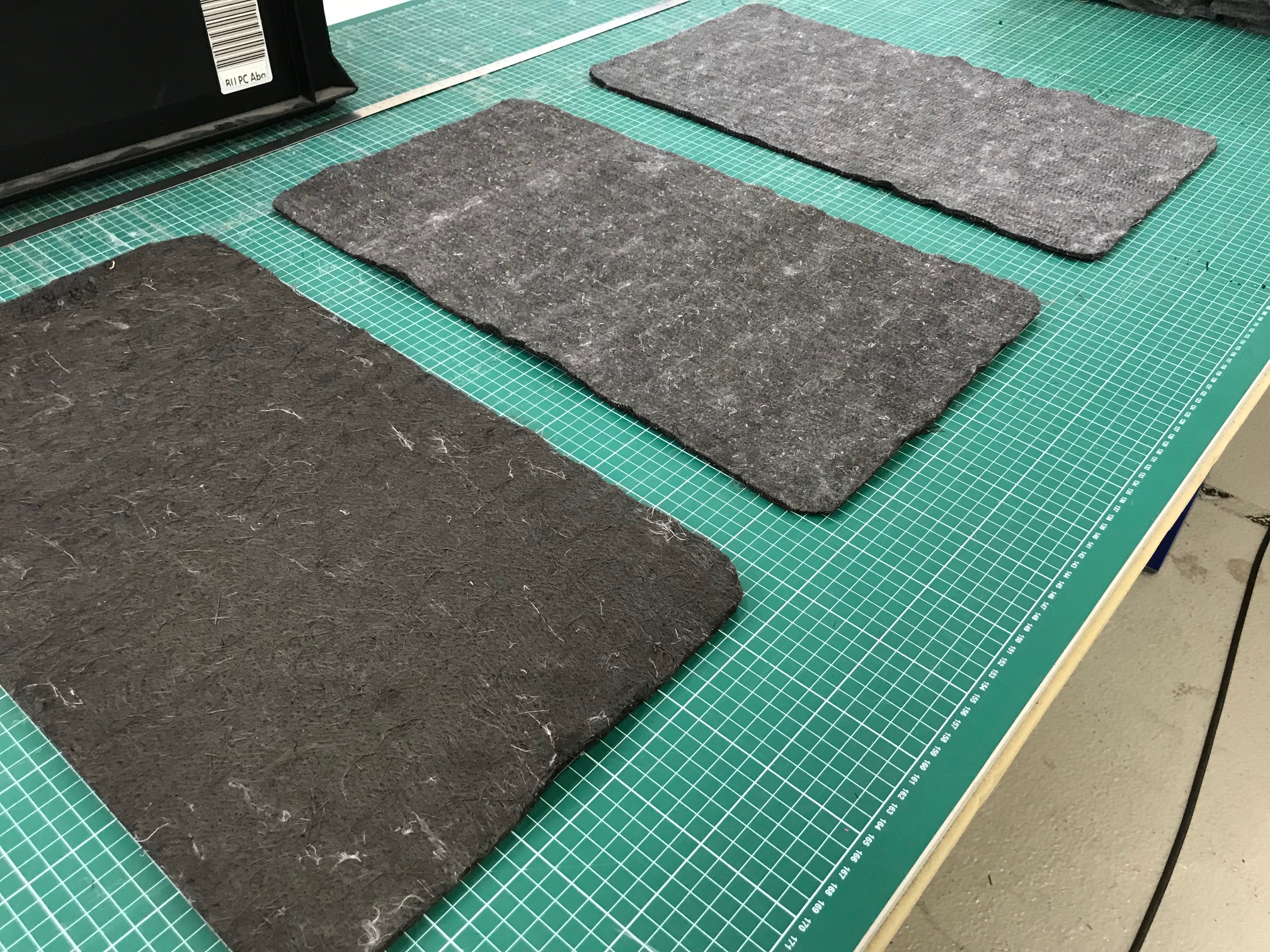
Selected and characterised the reinforcement and hybrid nonwoven configurations used for the experimental investigation.
Prepared test specimens
Manufactured different laminate configurations to compare the influence of the integrated nonwoven layer.
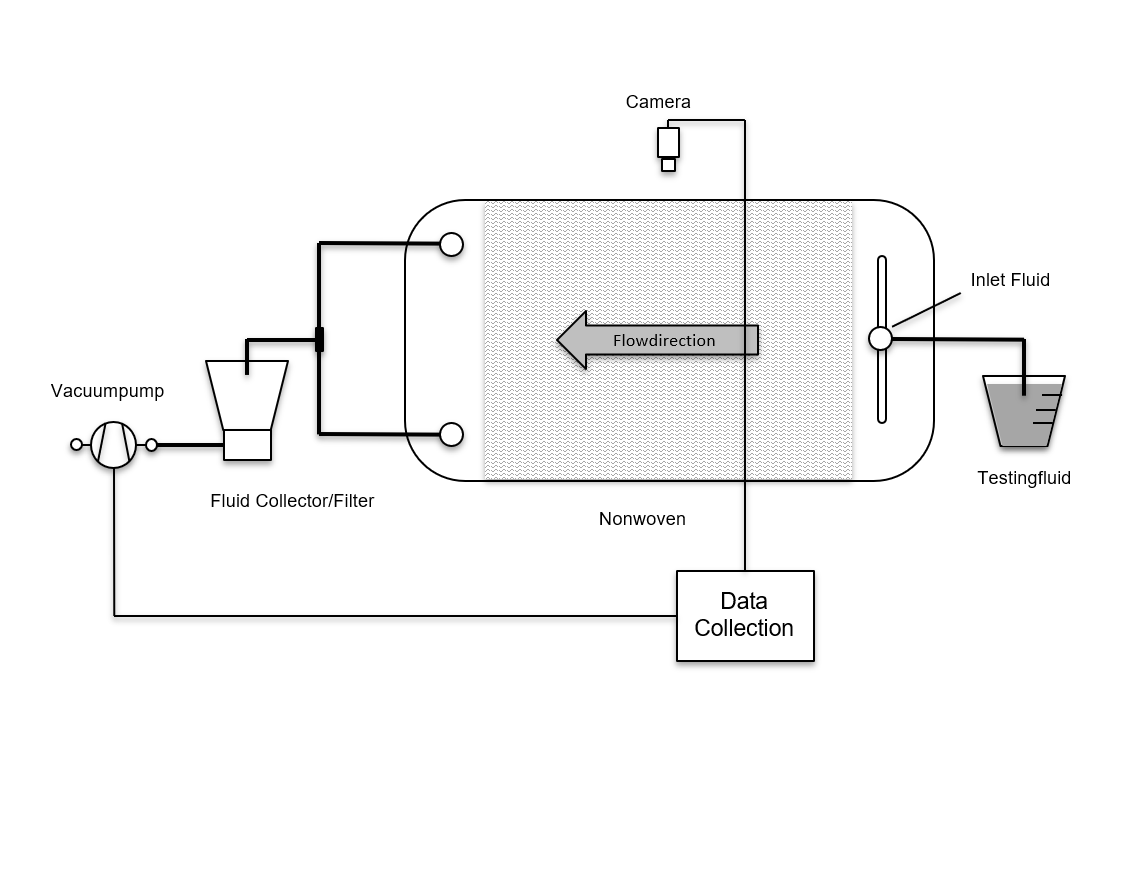
Measured resin flow
Investigated how the additional layer affected permeability and resin transport through the reinforcement.
Evaluated manufacturing behaviour
Compared the different configurations with regard to their potential influence on the infusion process.
Assessed integration into the laminate
Considered the possibility of leaving the nonwoven permanently inside the composite instead of using a removable auxiliary flow medium.
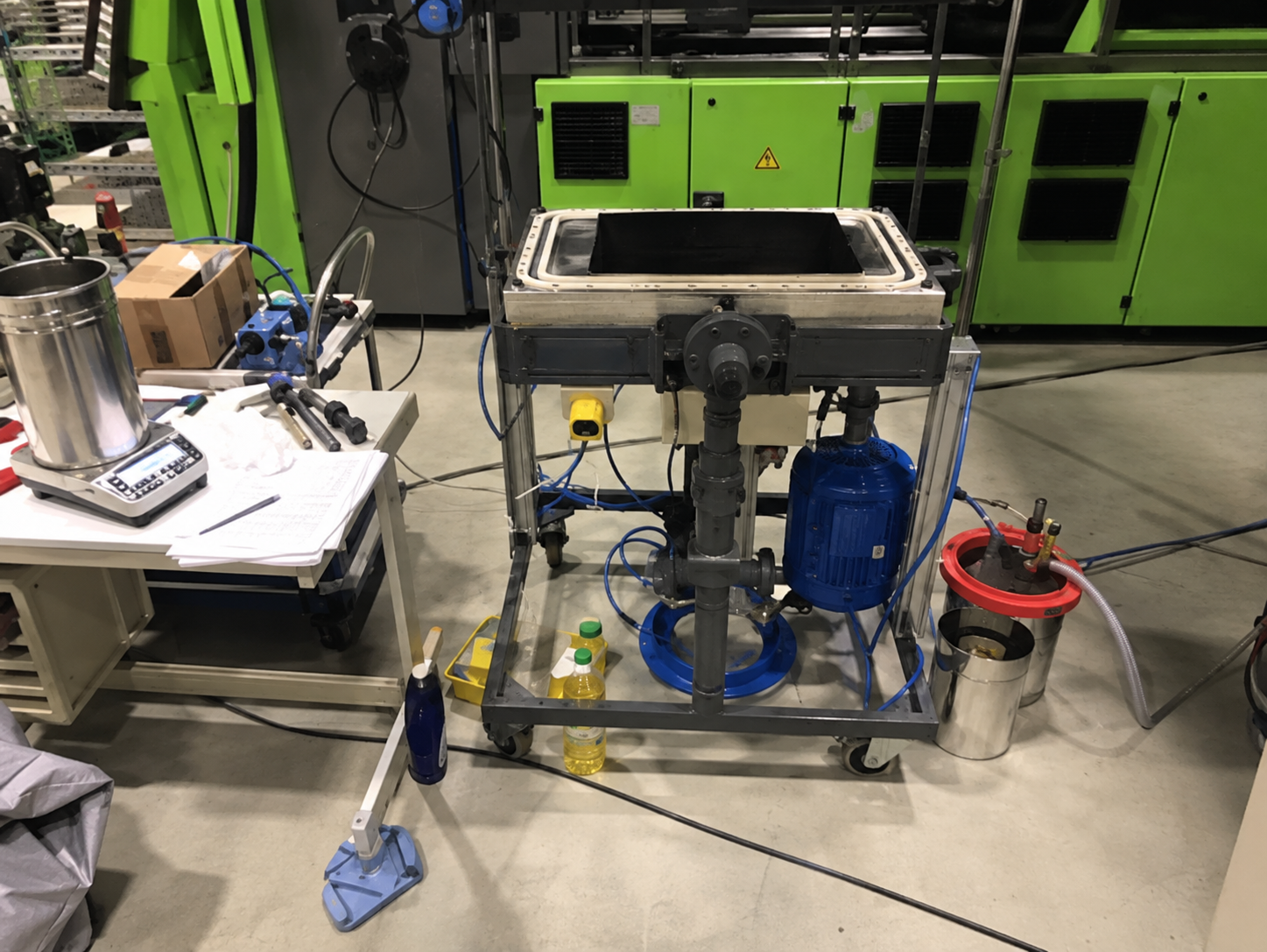
What was investigated
Permeability
How easily resin can flow through the reinforcement and how the integrated nonwoven changes the flow behaviour.
Flow behaviour
The development of the resin flow front during infusion and its influence on processing time.
Material integration
Whether the flow-enhancing layer can remain inside the laminate rather than being removed after manufacturing.
Manufacturability
The potential of the material concept to simplify and improve liquid composite moulding processes.
Result
Hybrid nonwovens can influence resin transport. The experimental work demonstrated how an additional textile layer changes the permeability of the reinforcement system.
Manufacturing efficiency and material design are directly connected. Changes to the laminate architecture affect not only the final material but also the way the component can be manufactured.
An integrated flow layer offers an alternative manufacturing concept. Instead of treating flow enhancement purely as an auxiliary production step, the functionality can potentially be incorporated into the laminate itself.
The work combined material science with process engineering. Experimental material characterisation was linked directly to the practical requirements of composite manufacturing.